Canton Network (CANTON) Analysis
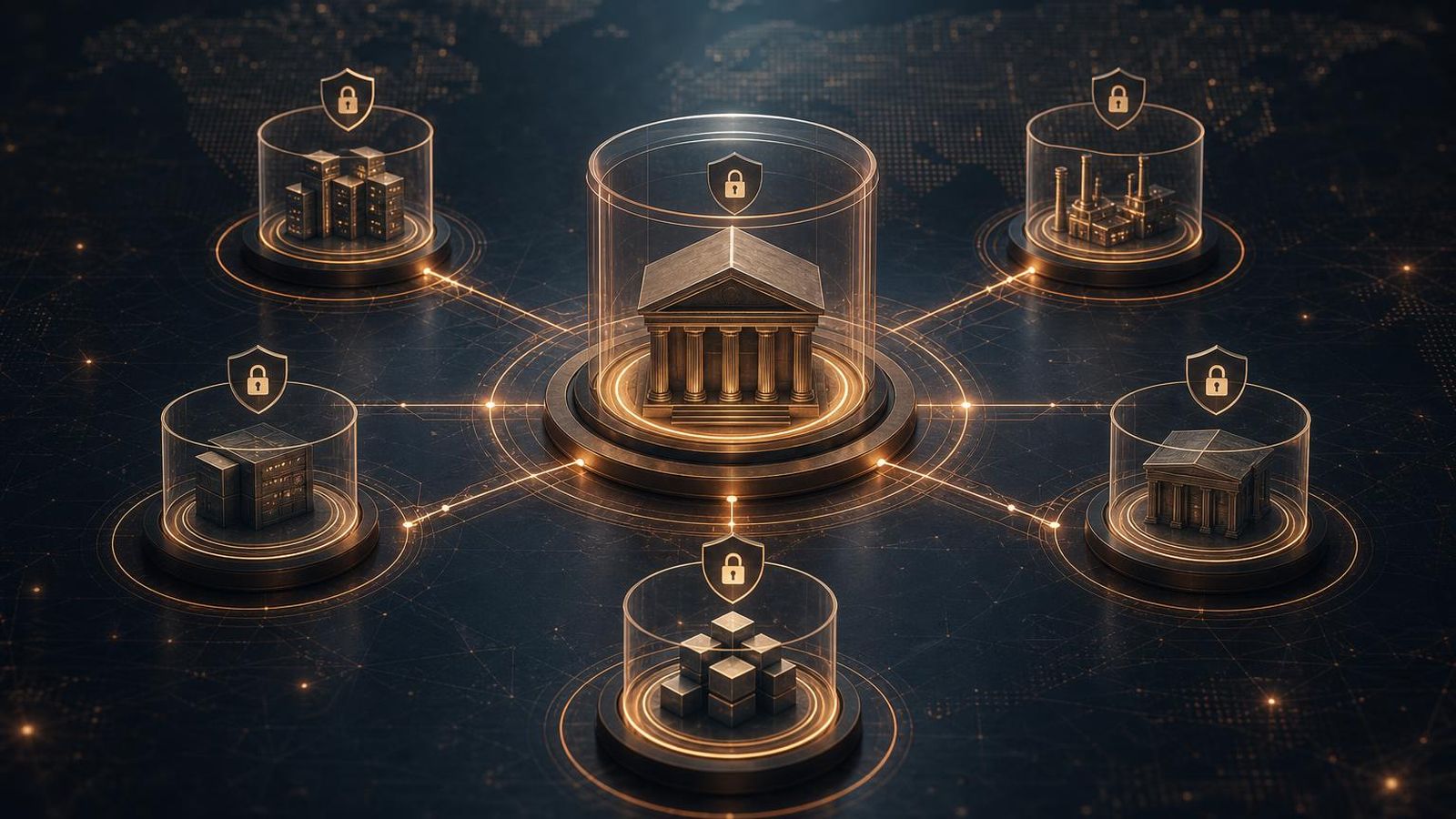
Built for regulated financial institutions — where privacy, compliance, and interoperability are non-negotiable.
Price
—
Market Cap
—
FDV
—
24h Volume
—
Category
Enterprise permissioned blockchain
24h Change
—
Analysis published · Related coverage · All token analyses
The Overview
The fast answer on Canton Network
Canton Network is a blockchain network built by Digital Asset (the company behind the Daml smart contract language) specifically for regulated financial institutions. Its design addresses the core privacy challenge of institutional finance: a bank using a public blockchain for settlement should not have its transaction flow visible to its competitors. Canton's privacy-preserving design allows financial institutions to participate in shared infrastructure without exposing proprietary transaction data.
The institutional backing is significant. Goldman Sachs, Deutsche Börse, BNY Mellon, Deloitte, Microsoft, and more than a dozen other major financial institutions and technology companies have participated in Canton Network development and pilot programs. This is not a typical crypto project with retail investor momentum — it is an enterprise infrastructure build-out driven by institutional demand.
The public CANTON token complicates an otherwise clean enterprise infrastructure story. Financial institutions typically prefer permissioned or consortium blockchain infrastructure, not public token-based systems. The CANTON token creates a bridge between the enterprise adoption story and public crypto markets, but that bridge carries its own tensions around regulatory classification and institutional appetite.
- Technology: Digital Asset's Canton protocol; Daml smart contract language.
- Privacy: sub-transaction privacy — institutions can transact without exposing data to other network participants.
- Backers: Goldman Sachs, Deutsche Börse, BNY Mellon, Microsoft, Deloitte.
- Use case: tokenised securities settlement, institutional DeFi, syndicated lending.
- Key risk: enterprise adoption timelines are long; token value accrual depends on institutional-scale usage.
The Tech Stack
Canton protocol and Daml
The Canton protocol is built on Digital Asset's years of work on Daml (Digital Asset Modeling Language), a smart contract language specifically designed for financial contracts. Daml contracts express rights and obligations between named parties and can be deployed on Canton Network or on other distributed ledger systems (Canton supports multi-ledger deployment).
The critical technical innovation is Canton's privacy model: sub-transaction privacy. Unlike public blockchains where every node sees every transaction, Canton reveals only the relevant transaction data to each participant. Two banks settling a bond trade see only their transaction — not the Goldman Sachs/Deutsche Börse settlement happening simultaneously on the same infrastructure. This is architecturally different from mixing approaches or ZK-proofs and is specifically designed for institutional counterparty privacy requirements.
Canton's interoperability layer allows multiple Canton applications (potentially on separate permissioned networks) to interoperate, with atomic transaction completion across app boundaries. This enables a DvP (delivery-versus-payment) transaction to simultaneously settle the securities leg on one sub-network and the cash leg on another, atomically.
Real-World Use
What Canton Network is being used for
Digital securities settlement is the primary use case: tokenised bonds, equities, and other financial instruments settled on Canton infrastructure with atomic DvP. Deutsche Börse has been piloting this for securities settlement; BNY Mellon has been involved in custody integration.
Institutional DeFi on Canton means regulated financial institutions participating in liquidity pools, repo markets, and lending facilities on permissioned infrastructure. The design allows institutions to benefit from DeFi mechanisms (automated market making, permissionless access) while retaining privacy and remaining in compliance with their regulatory obligations.
Syndicated lending and trade finance are longer-duration use cases where the multi-party coordination complexity of traditional processes (multiple banks, agents, trustees) maps well to smart contract coordination.
Tokenomics
CANTON token mechanics
CANTON tokens serve as the network's utility and governance token. Validators stake CANTON to participate in network consensus. Transaction fees are paid in CANTON. Governance proposals (network upgrades, parameter changes) are voted on by CANTON holders.
The tension in CANTON tokenomics is the audience mismatch: institutional financial firms that would drive the majority of Canton Network transaction volume are generally unwilling or unable to hold public crypto tokens for regulatory and operational reasons. This means the financial institutions driving actual network usage may use Canton infrastructure via gateways or service providers who hold CANTON on their behalf, rather than holding CANTON directly. How this affects token value accrual is not yet clear at the scale required.
Competitive Landscape
Enterprise blockchain competitive landscape
Hyperledger Fabric is the incumbent enterprise blockchain in many financial institutions, but it lacks Canton's sub-transaction privacy and Daml's financial contract expressiveness. R3 Corda is the closest direct competitor — it was built for financial contract settlement and has deep institutional adoption, particularly in trade finance and securities. The Canton vs Corda comparison is the most direct: both are financial-institution-focused, both support privacy, both use actor-based contract models.
Hedera Hashgraph targets enterprise and government use cases with different technology (hashgraph consensus, governing council model). The tokenised RWA infrastructure that Ondo Finance and others are building on public chains (Ethereum) represents a different approach: using public smart contracts with compliance layers rather than permissioned institutional infrastructure.
Target Holder
Who CANTON is genuinely useful for
CANTON is appropriate for investors with high conviction on: (1) institutional DeFi and tokenised securities becoming a multi-trillion-dollar market within a 5–10 year horizon; (2) Canton Network capturing material share of that market over competing enterprise blockchain solutions; (3) the CANTON public token capturing meaningful value from institutional usage.
These are individually plausible but conjunctive — all three need to be true for CANTON to be a strong investment. Each has genuine uncertainty. This is a high-risk, long-duration institutional infrastructure bet.
CANTON is not appropriate for retail DeFi investors, users seeking yield or DeFi participation, or investors with short time horizons. Enterprise infrastructure adoption is measured in years, not months.
The cases
Bull case and bear case
Bull case
- Major financial institutions (Goldman Sachs, Deutsche Börse, BNY Mellon) provide credibility, development resources, and a direct customer pipeline.
- Sub-transaction privacy is the correct technical approach for institutional DeFi — no competing enterprise blockchain provides this natively.
- Daml is a mature, battle-tested smart contract language specifically designed for financial contracts.
- Tokenised securities and institutional DeFi are genuinely large addressable markets if institutional adoption scales.
- Digital Asset's technology has a decade of development history and institutional validation.
Bear case
- Enterprise blockchain adoption timelines are notoriously long — institutional change management, legal, and compliance processes are slow.
- R3 Corda has deep existing institutional relationships in the same market; switching costs for existing Corda deployments are high.
- CANTON public token value accrual requires institutions to either hold CANTON directly or use intermediaries who do — institutional token holding is operationally and regulatorily complex.
- The permissioned/consortium model is architecturally distinct from public DeFi — the retail crypto market may not reward enterprise infrastructure plays appropriately.
- Success depends on a small number of large institutional clients — concentration risk is high.
Where to buy
Where to Buy CANTON
CANTON trades on a wide range of centralised exchanges and decentralised liquidity pools. The table below covers the highest-volume venues as of April 2026, sourced from CoinMarketCap market data.
| Exchange | Pair | Price | |
|---|---|---|---|
| OKX | CANTON/USDT | live | Buy CANTON ↗ |
| Bybit | CANTON/USDT | live | Buy CANTON ↗ |
CryptoTokenTalk may earn a commission if you buy CANTON via these links. This does not affect our editorial coverage or scores. Prices sourced from CoinMarketCap, April 19, 2026. Always verify current prices before trading.
FAQ
Frequently asked questions
What is the Canton Network?
What is Daml?
What does "sub-transaction privacy" mean?
Is Canton Network a public or permissioned blockchain?
How does Canton compare to Hyperledger Fabric or Corda?
Related analysis
More tokens worth reading
Ethereum
Low risk
The native asset of Ethereum: programmable settlement, proof-of-stake security, EIP-1559 fee burn, and the base collateral asset for most on-chain finance.
Solana
Low risk
A high-throughput Layer 1 blockchain designed for low-latency, sub-cent-fee smart contract execution. Uses Proof of History for block ordering and tower BFT for finality. SOL is the native staking, fee, and governance asset.
Chainlink
Low risk
The leading decentralised oracle network. Provides tamper-resistant price feeds, verifiable randomness, and cross-chain communication infrastructure to smart contracts across 20+ blockchains. LINK is the payment and staking token.
Hyperliquid
Low risk
Native token of Hyperliquid, an on-chain perpetuals exchange operating on its own application-specific L1. HYPE is used for staking, governance, and protocol fee distribution through the HLP vault system.